Can your AI audit see the high-risk gaps lingering in production?
When AI Says “All Clear”—Yet Residual Risk Lingers in Production
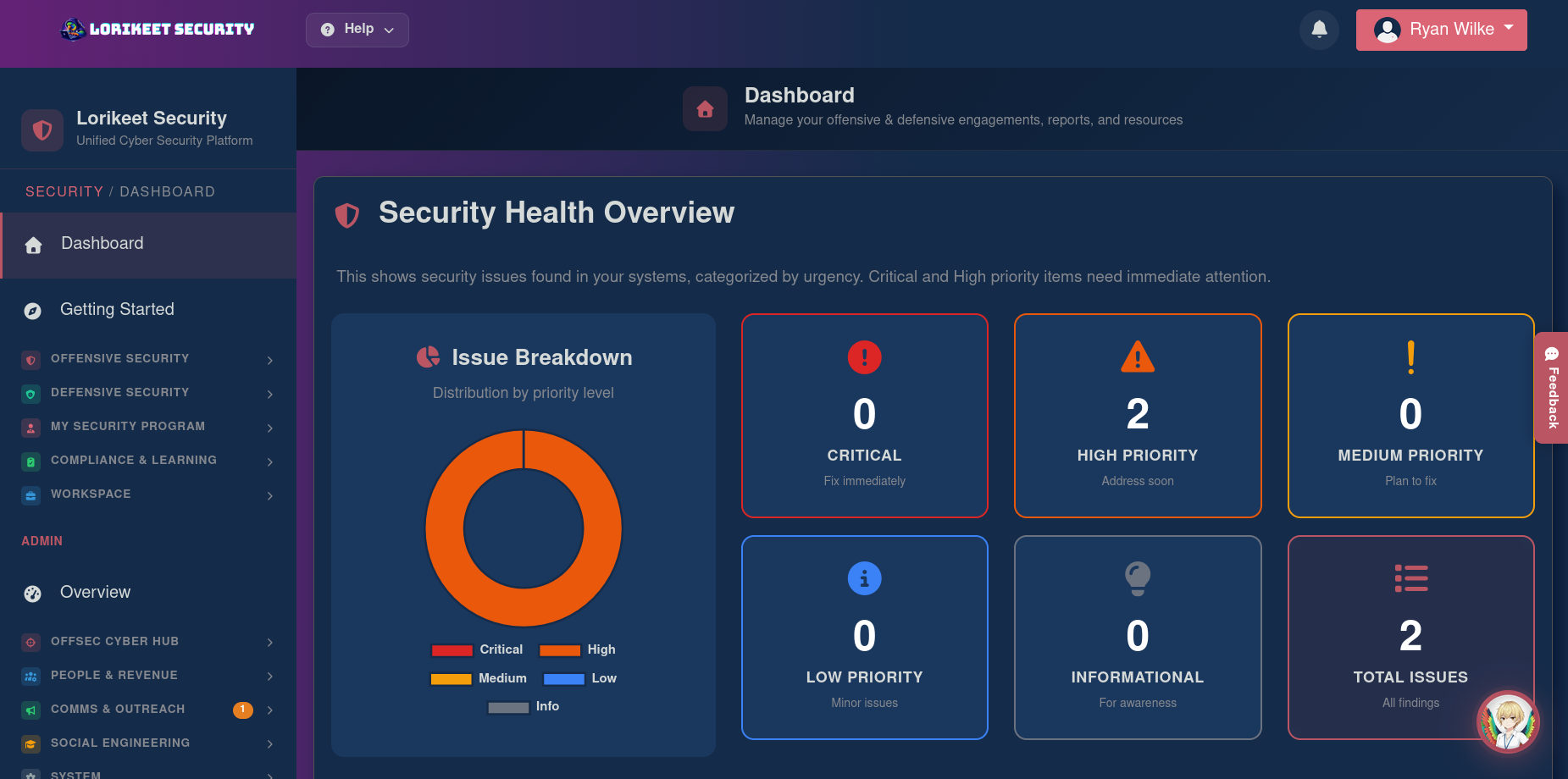
Picture this: it’s Monday morning, your team shipped over the weekend, and the AI-assisted code review shows a clean bill of health. By noon, a manual pentester flags a session fixation edge case and a reverse-proxy header misconfiguration that your automation never saw. The Lorikeet Security Case Study matters because it quantifies that precise gap: after an AI-driven audit closed classic code-level flaws, a targeted manual assessment still uncovered five additional issues—two High—across runtime and configuration layers. Bottom line: AI reduces noise; targeted humans reclaim signal critical to business resilience.
The Business Case
For Developer Tools leaders, the Flowtriq case study is a leading indicator of a structural market shift. As teams adopt Claude, Cursor, and Copilot to enforce Code Quality Tools and Best Practices at commit time, the residual risk is migrating from source code to runtime, infrastructure, and configuration. That is exactly where manual pentesting and Attack Surface Management deliver outsized marginal value per hour. In the Flowtriq engagement, an AI audit closed real defects (XSS, SQLi, template injection, weak crypto), but Lorikeet’s manual pentest surfaced five additional findings—two High, one Medium, two Low—across session management edge cases, runtime TLS posture, file-system hygiene, and reverse-proxy header configuration.
From an ROI perspective, this dual-track approach compresses Mean Time to Risk Discovery (MTRD) and focuses human expertise where AI is structurally blind. Our analysis suggests three quantifiable levers: 1) avoided incident cost from high-severity, environment-specific exploits; 2) audit-readiness acceleration across SOC 2, HIPAA, PCI-DSS, HITRUST, and FedRAMP; 3) developer efficiency gains by removing false positives and channeling refactoring to the highest-risk Architecture Patterns. For leaders competing on trust and uptime, pairing AI review with targeted manual validation is now table stakes—not a luxury.
Reference: Lorikeet Security case study (https://lorikeetsecurity.com/blog/flowtriq-case-study-ai-audit-pentest-gap)
Key Strategic Benefits
- -
Operational Efficiency:
- - A PTaaS portal with live findings and real-time chat collapses feedback loops, enabling engineers to triage, fix, and verify within the same sprint. Integrations streamline defect flow into existing DevOps and Refactoring Guides, improving change success rates and reducing rework.
- -
Cost Impact:
- - Catching environment-specific Highs (e.g., TLS misconfigurations, proxy header mishandling) pre-production avoids potential seven-figure breach exposure and incident-response drag. Concentrating human testing on AI-resistant layers increases cost-per-finding efficiency versus broad, undirected manual efforts.
- -
Scalability:
- - Lorikeet’s 170+ engagements across SaaS, AI platforms, healthcare, fintech, and government demonstrate repeatability across varied Architecture Patterns. Continuous Attack Surface Management extends coverage between releases, scaling validation beyond point-in-time tests as teams and cloud footprints grow.
- -
Risk Factors:
- - Over-reliance on AI code review can breed a false sense of security; leaders must explicitly budget for runtime and configuration testing. Watch for fragmented toolchains and fix-SLA drift; without governance, high-priority findings may languish despite visibility.
Implementation Considerations
Pilot a dual-track program across one or two tier-1 services. Sequence: run your existing AI-assisted code audit to close source-level issues; then schedule a time-boxed manual pentest targeting runtime, infrastructure, and configuration surfaces. Resource plan: appoint a security engineering owner, an AppSec lead to define acceptance criteria (e.g., High/Medium closure SLAs, retest windows), and dev triage champions in each squad. Integration: connect the PTaaS portal to your issue tracker, chat, CI/CD, and SIEM for telemetry correlation. Change management: codify new Best Practices in secure Architecture Patterns—session handling, TLS posture, proxy/header canonicalization, and file-system hygiene—and update Refactoring Guides and guardrails in Code Quality Tools to prevent regression. Compliance: map evidence artifacts to SOC 2, HIPAA, PCI-DSS, HITRUST, or FedRAMP control narratives to reduce audit fatigue. Measure success with four metrics: residual risk per service (post-AI, post-pentest), mean time to triage, fix SLA adherence, and retest pass rate.
Competitive Landscape
Alternatives cluster into four models. AI-first code scanners (GitHub Advanced Security, Snyk Code, CodeQL, and prompts with Claude/Copilot/Cursor) excel at source-level classes but are structurally limited on runtime, environment, and policy drift. PTaaS providers such as Cobalt and NetSPI offer scalable delivery; some, like Bishop Fox and NCC Group, bring deep expertise but may operate in longer, consultancy-style cycles. Bug bounty platforms (HackerOne, Bugcrowd, Synack) can uncover edge cases through crowd diversity, though signal-to-noise and SLA predictability vary. Where Lorikeet stands out—per the Flowtriq case—is explicit optimization for AI-native SDLCs, using manual testing and Attack Surface Management to probe the gaps AI cannot see, with compliance alignment and SOC-as-a-Service/vCISO options for end-to-end coverage.
Recommendation
Adopt a dual-track security validation strategy. Immediately: select two critical services, run your AI code audit, then engage Lorikeet (or an equivalent manual PTaaS) to target runtime/configuration layers; define SLAs for High/Medium fixes and retest within the same quarter. Standardize outcomes into Architecture Patterns, update Code Quality Tools policies, and embed Refactoring Guides to codify lessons learned. Track residual risk reduction per release as your north-star metric for sustained ROI.