Heartbeat: A Complete Guide for Developer Tools Professionals
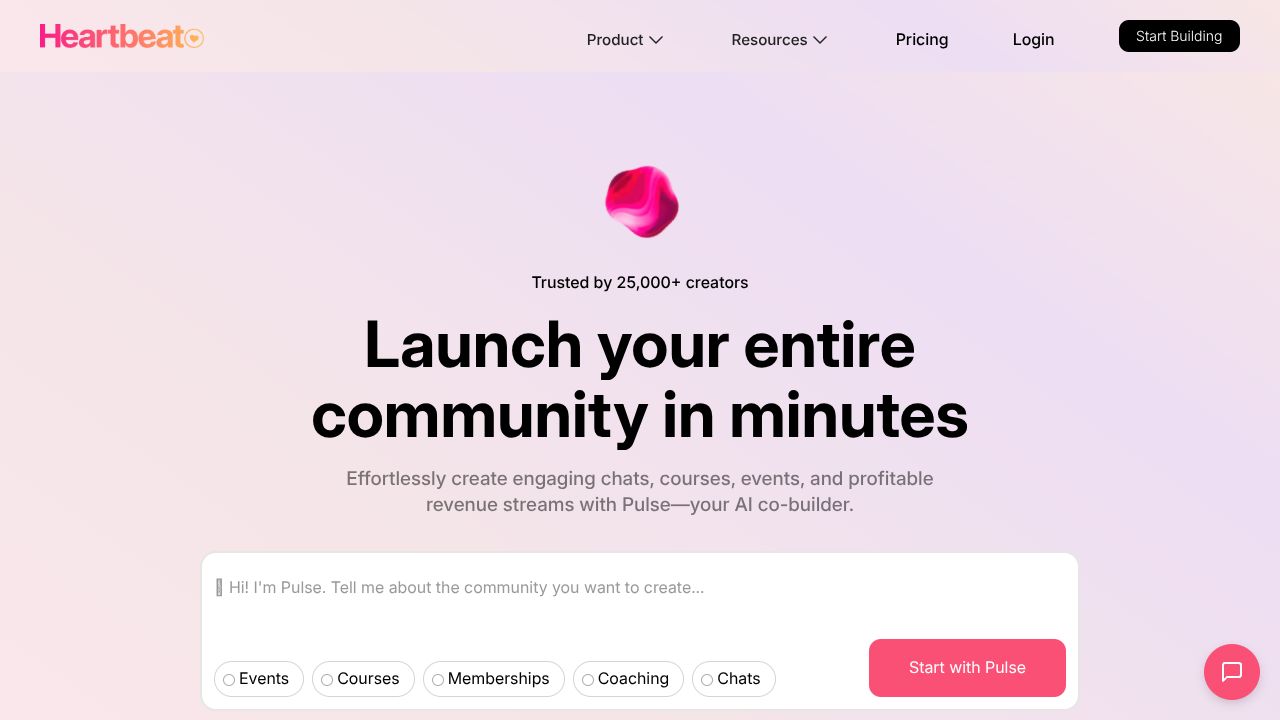
Stop Treating “Community” Like a Chat Room: Use Heartbeat to Engineer Outcomes
Most community tools reward noise, not results. Heartbeat flips that. For Developer Tools professionals who care about Architecture Patterns, Code Quality Tools, and Refactoring Guides, the goal isn’t endless threads—it’s measurable peer learning and shipped improvements. Heartbeat is a cost-effective platform built around AI-powered member matchups, custom branding, and automated workflows that help you structure pairing programs, masterminds, and content sprints without operational overhead. Compared to pricier suites like Circle or chaotic chat-first tools (Discord, Slack), Heartbeat’s pairing-first flow is better aligned with developer outcomes—code reviews completed, refactors merged, and best practices adopted.
Step 1: Configure for Outcomes, Not Just Onboarding
- - Create your account at https://www.heartbeat.chat and choose a custom domain (e.g., community.yourbrand.dev). Enable email whitelabeling to increase deliverability for event reminders and pairing notifications.
- - Set profile fields that drive meaningful matchups:
- - Languages/stack (TypeScript, Python, Go), frameworks (React, Django)
- - Time zone and availability
- - Goals (e.g., “Improve refactoring practices,” “Learn event-driven Architecture Patterns”)
- - Roles (tool maintainer, solutions engineer, dev advocate)
- - Define core spaces with intent-driven names:
- - Architecture Patterns Clinic
- - Code Quality Tools Reviews
- - Refactoring Guides Library
- - Best Practices Q&A
- - Build an onboarding workflow:
- - Auto-tag members based on survey responses (e.g., “backend,” “frontend,” “SRE”)
- - Send a DM with a 3-step checklist: complete profile, join your first pairing, RSVP to “Refactor Friday”
- - Seed content templates:
- - RFC template, code review rubric, refactoring proposal outline, “repro steps + logs” bug template
- - Enable points/badges:
- - Points for giving code reviews, publishing Refactoring Guides, answering within 24 hours
- - Badges: “Quality Champion,” “Architecture Mentor,” “Pairing Pro”
Step 2: Core Features That Matter (With Dev-Ready Examples)
- - AI-Powered Member Matchups
- - Configure rules: match by language + time zone + goal alignment.
- - Example: Weekly “Refactor Friday” auto-pairs Go developers targeting cyclomatic complexity reduction; prompts include a review checklist and a time-boxed agenda.
- - Automated Workflows
- - Trigger a DM when a question goes 24 hours unanswered—auto-mention tagged experts.
- - On member signup, auto-assign a “starter mission”: contribute a code review or summarize an Architecture Pattern anti-pattern.
- - Before events, send reminders and auto-attach prep materials (linters config, sample repos).
- - Custom Domains and Email Whitelabeling
- - Host at your brand domain; improve trust and deliverability for pairing invites and digests.
- - Tip: Set DKIM/DMARC to cut missed notifications that derail scheduling.
- - Points/Badges System
- - Leaderboards by “impact actions”: code reviews performed, questions answered, guides published.
- - Tie rewards to artifacts that persist (Refactoring Guides) rather than ephemeral chat replies.
Step 3: Pro Tips for Developer Tools Professionals
- - Design a Tag Taxonomy That Scales
- - Keep to 12–18 tags max: languages, frameworks, domains (Observability, CI/CD), plus goals (Refactoring, Testing).
- - Use tags to drive AI matchups, expert routing, and content digests.
- - Engineer Mastermind Pods
- - Create 4–6 person pods by seniority and stack; set monthly Architecture Patterns deep-dives with rotating facilitators and shared rubrics.
- - Instrument Your Program
- - Track: time to first pairing (TTFP), D7 activation (completed first pairing or review), 24h answer rate, DAU/MAU, and retention by cohort.
- - The data shows these leading indicators predict content creation and code-quality wins.
- - Operational Cadence
- - Run “Refactor Friday,” “Linter Lab,” and monthly “Design Review” cadences. Automate signups, reminders, and follow-up surveys.
Common Mistakes to Avoid
- - Unstructured Spaces
- - Pitfall: Treating Heartbeat like generic chat leads to low signal.
- - Fix: Use templates, require reproducible titles, and pin rubrics in each space.
- - Over-Automating Pairings
- - Pitfall: Blind AI matchups without opt-outs or facilitator oversight.
- - Fix: Allow reschedule/skip, assign moderators to each pod, review pairing satisfaction monthly.
- - Too Many Tags
- - Pitfall: Tag explosion breaks routing and analytics.
- - Fix: Quarterly prune; merge synonyms; keep tags action-oriented and stack-specific.
How It Compares to Alternatives
- - Circle: Strong course/membership tools but higher cost for advanced features; lacks built-in pairing focus. Heartbeat wins on cost-efficiency and AI matchups for peer learning.
- - Discord: Great for real-time chat, poor for knowledge organization and pairing automation. Heartbeat provides structure, workflows, and measurable outcomes.
- - Slack: Familiar and searchable, but ephemeral and not community-first. Heartbeat’s points/badges and automated workflows drive sustained contributions.
- - GitHub Discussions: Excellent for repo-centric Q&A, limited for cross-repo peer pairing and events. Heartbeat layers structured programs over broader audiences.
Conclusion: Is Heartbeat Right for You?
If your mandate is to improve Code Quality Tools adoption, spread Best Practices, and publish high-signal Refactoring Guides—without enterprise overhead—Heartbeat is a smart, cost-effective choice. Its AI matchups and workflows turn community intent into repeatable programs that deliver measurable outcomes, not just chatter. Choose it to launch or scale pairing-first initiatives; consider alternatives if you need a heavyweight LMS or company-wide chat replacement. Building better code, one week at a time starts with pairing people on the right problems—Heartbeat makes that the default.